
Let’s start with the practical questions: how often, for how long and when to begin. Based on research by Danish scientist Dr Susanne Søberg and neuroscientist Dr Andrew Huberman, around 11 minutes per week is often recommended to gain the health benefits of cold exposure. This could mean two to four plunges lasting approximately three minutes each in water at its natural outdoor temperature, or a daily cold shower lasting 30 to 60 seconds. Autumn is an ideal time to start, as the gradual drop in water and air temperatures allows the body to adapt naturally.

Sudden contact with cold water triggers an immediate protective response known as vasoconstriction. Blood vessels and capillaries in the skin and extremities constrict to reduce heat loss and keep vital organs warm. After leaving the cold and gradually warming up, the opposite occurs: vasodilation, when blood vessels widen and blood flow to the tissues increases substantially. This alternating constriction and dilation acts as a workout for the smooth muscle in blood vessel walls. Šrámek described this phenomenon in a study published in the European Journal of Applied Physiology. The process improves blood vessel flexibility, microcirculation and the elasticity of the cardiovascular system as a whole. The rapid increase in blood and lymph flow also helps remove metabolic waste from tissues more efficiently.
One of the most interesting scientific findings is that cold exposure activates brown fat and promotes the conversion of ordinary white fat into so-called beige fat, a process known as browning. A landmark study published in The New England Journal of Medicine confirmed that adults have functional brown fat that is activated by cold. White fat primarily stores excess energy, and excessive amounts are associated with obesity and inflammation. The main role of brown fat is to burn energy to generate heat rather than store it. In practical terms, this means the body becomes better able to burn calories even at rest. Regular cold exposure helps build more metabolically active fat tissue, naturally increasing the basal metabolic rate.
Although cold exposure is no miracle cure for obesity without dietary changes, it can significantly support weight loss in two ways. The first is an immediate increase in energy expenditure: during cold exposure and shortly afterwards, the body must use considerable energy to maintain its core temperature at 37 °C. Research by van der Lans published in The Journal of Clinical Investigation also shows that activating brown fat through cold exposure significantly improves glucose uptake from the blood and increases insulin sensitivity, helping to prevent metabolic syndrome and type 2 diabetes.

The body’s response to cold acts as a mild, controlled stressor. This brief stress stimulates the immune system, making it more ready to respond. Exposure to cold water supports the production and activity of white blood cells, which play a key role in fighting viruses and bacteria. A well-known Dutch study by Buijze, published in PLOS ONE, found that people who finished their daily shower with 30 to 90 seconds of cold water for 30 days had 29% less sickness absence from work than the control group.

Cold exposure affects not only the body but also brain chemistry. A clinical study by Šrámek published in the European Journal of Applied Physiology demonstrated that immersion in water at 14 °C causes a gradual, sustained increase in dopamine levels of up to 250% above baseline, with the effect lasting several hours afterwards. Noradrenaline levels can rise by as much as 530%, leading to an immediate increase in alertness and mental energy, along with reduced feelings of fatigue.
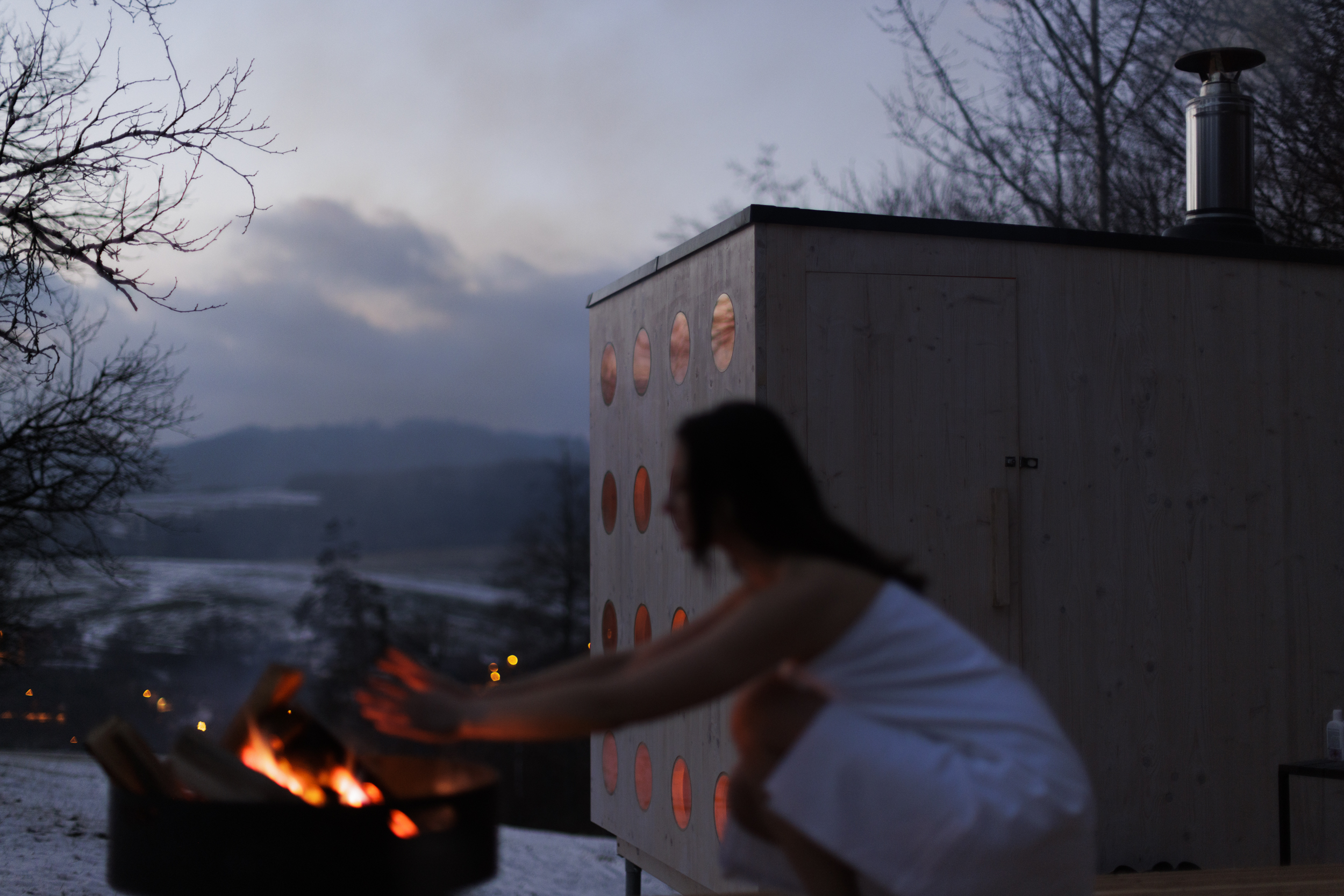
Cooling down is as much a part of the sauna cycle as warming up and resting afterwards. Alongside a cold shower, a cold plunge tub offers another way to cool down. In a garden or on a terrace, it provides a space for both regular cold plunges and cooling off after a sauna.
If you combine cold exposure with a sauna or a warm shower, always finish with cold. According to Dr Susanne Søberg’s findings, allowing the body to warm itself up afterwards through its own heat production maximises brown fat activity and overall energy expenditure.